
Excavator Training in Bloemfontein: Your Complete 2027 Guide to Becoming an Accredited Excavator Operator
Everything you need to know before you enrol — what an accredited course covers, entry requirements, what operators really earn in South Africa, how to spot fake schools, and how to start your training with Real Skills Training Institute in Bloemfontein CBD.
- QCTO / SETA accredited provider
- Hands-on training on real excavators
- Free accommodation for out-of-town learners
- International students welcome
Quick answer: where can I do accredited excavator training in Bloemfontein?
Real Skills Training Institute (trading as Real Skills Technical FET College) offers accredited excavator operator training at Cuthbert's Building, 1st Floor, Office 0107, 78 Charlotte Maxeke Street, Bloemfontein CBD — opposite Hoffman Square. Training combines classroom theory with practical seat time on real excavators, followed by assessment and certification. Learners from outside Bloemfontein get free accommodation, and international students are accepted. Call 063 804 8966 or register online.
Why excavator training in Bloemfontein is a smart career move
Almost every construction, civil engineering and mining project starts with an excavator. Trenches for water and sewer lines, foundations for houses and malls, road rehabilitation, dam and canal work, open-cast mining, landfill management and solar-farm groundwork all depend on skilled operators who can dig accurately, load trucks efficiently and — above all — work safely.
Bloemfontein sits at the centre of South Africa, with the N1, N6 and N8 meeting here and construction, municipal infrastructure, agriculture and the Free State goldfields all within reach. That makes it an ideal base to train and then work across the Free State, Northern Cape, Eastern Cape, North West and beyond.
The catch? Employers and site safety officers increasingly ask for proof of accredited training and a valid certificate of competence before they let anyone into the cab. Under the Occupational Health and Safety Act (and the Mine Health and Safety Act on mines), employers must ensure machinery is operated only by trained, competent people. A proper course is your ticket onto site.
Start your application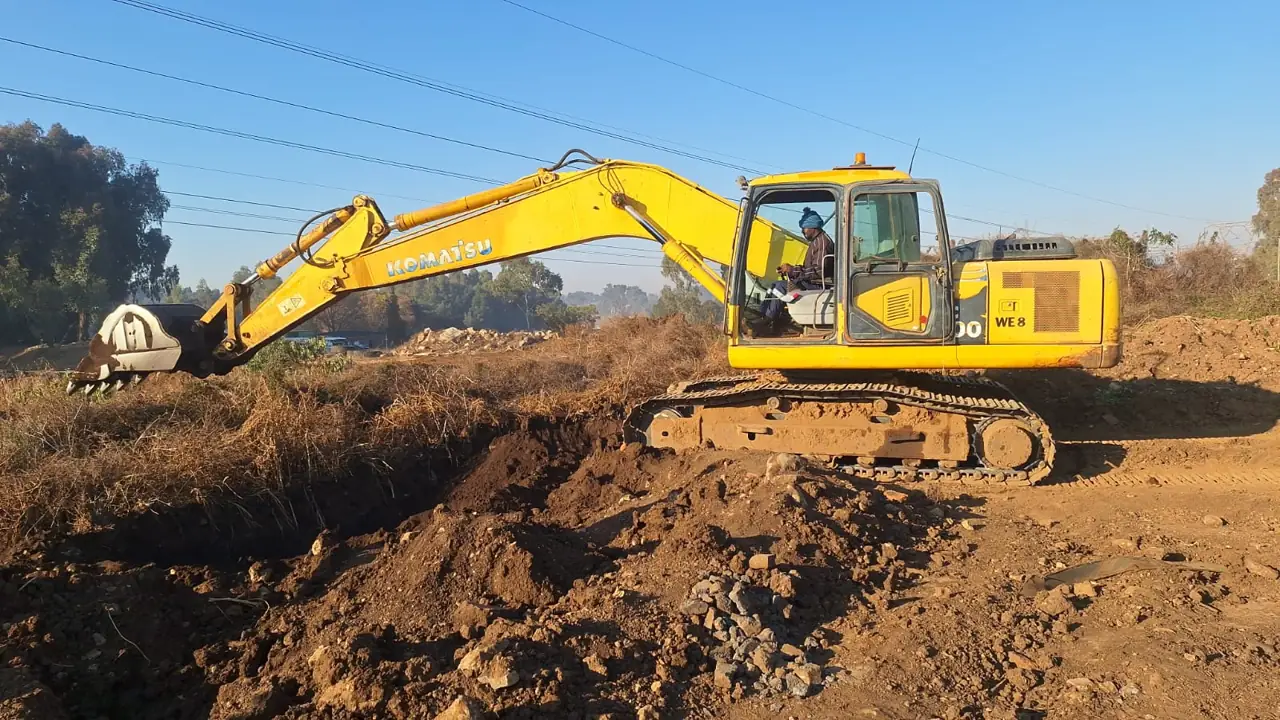
What you will learn on our excavator operator course
Our programme is built around what employers actually test on day one: can you inspect the machine, operate it smoothly, dig to a line and level, load a truck without spilling, and keep yourself and the ground crew safe? Training is split between the classroom and the training yard.
Theory & legislation
- Excavator types: tracked, wheeled, mini and large hydraulic
- Main components, hydraulics and controls (ISO / SAE patterns)
- OHS Act duties of operators and employers
- Hazard identification and risk assessment
- Signals and communication with banksmen
Pre-use inspection
- Daily walk-around and pre-start checklist
- Fluid levels, tracks, pins, bushings and hoses
- Bucket, teeth and quick-hitch safety checks
- Reporting defects and lock-out procedures
- Basic routine maintenance and greasing
Practical operation
- Safe mounting, start-up and shutdown
- Tracking, steering and travelling on slopes
- Slewing, boom, arm and bucket coordination
- Trenching, bulk digging, levelling and backfilling
- Loading ADT and tipper trucks efficiently
Site safety
- Underground services and overhead power lines
- Trench collapse, edge distance and ground stability
- Exclusion zones and working near people
- Fire, fuel and emergency procedures
Assessment
- Written / oral knowledge assessment
- Practical assessment by a qualified assessor
- Portfolio of evidence
- Moderation of results
Certification
Competent learners receive an excavator operator certificate of competence and statement of results from an accredited provider — the documents employers and site safety officers ask to see.
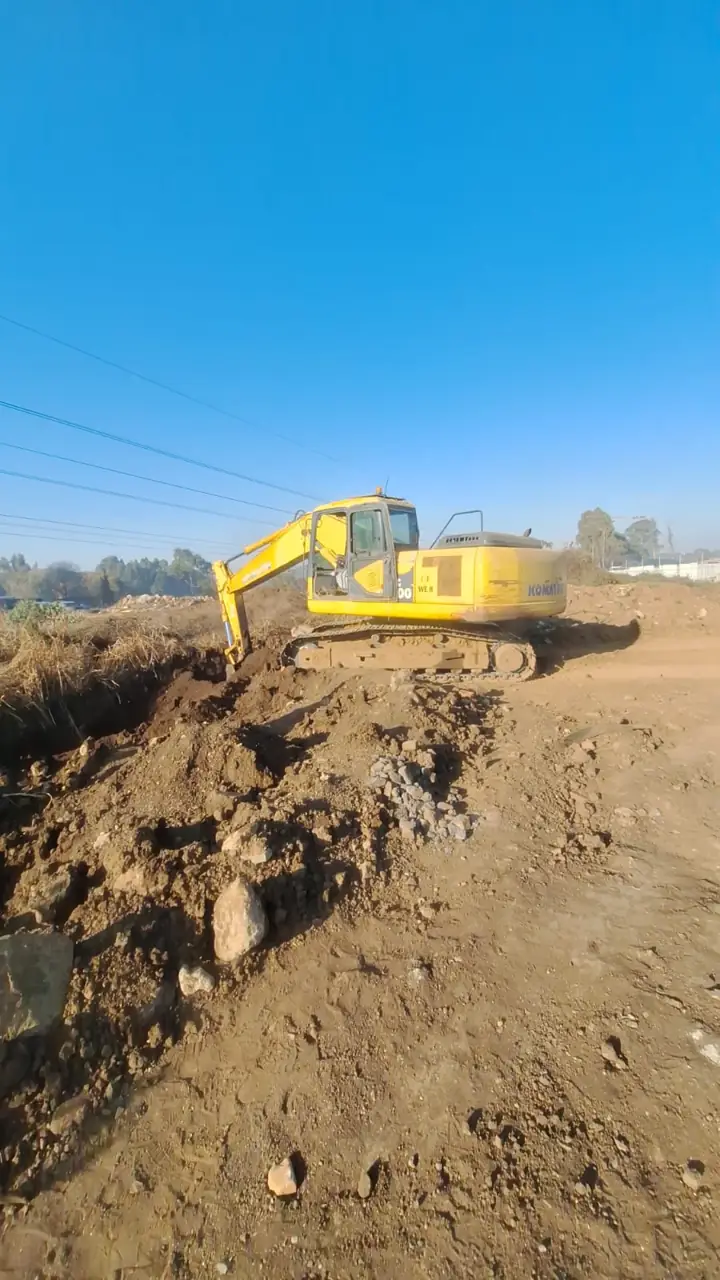
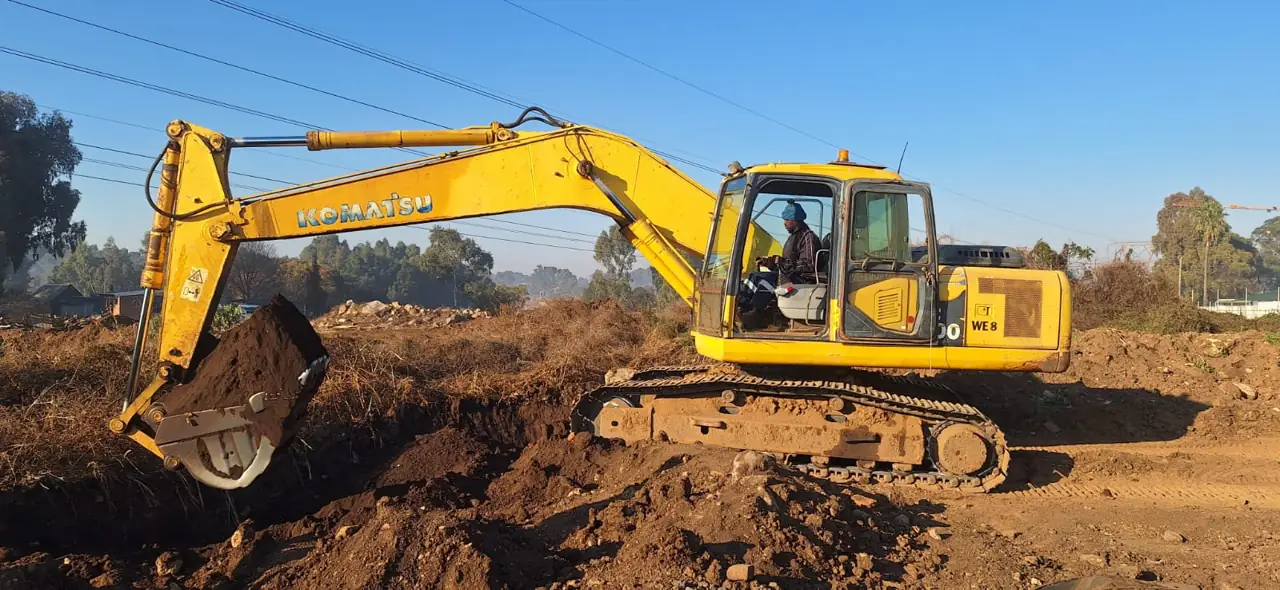
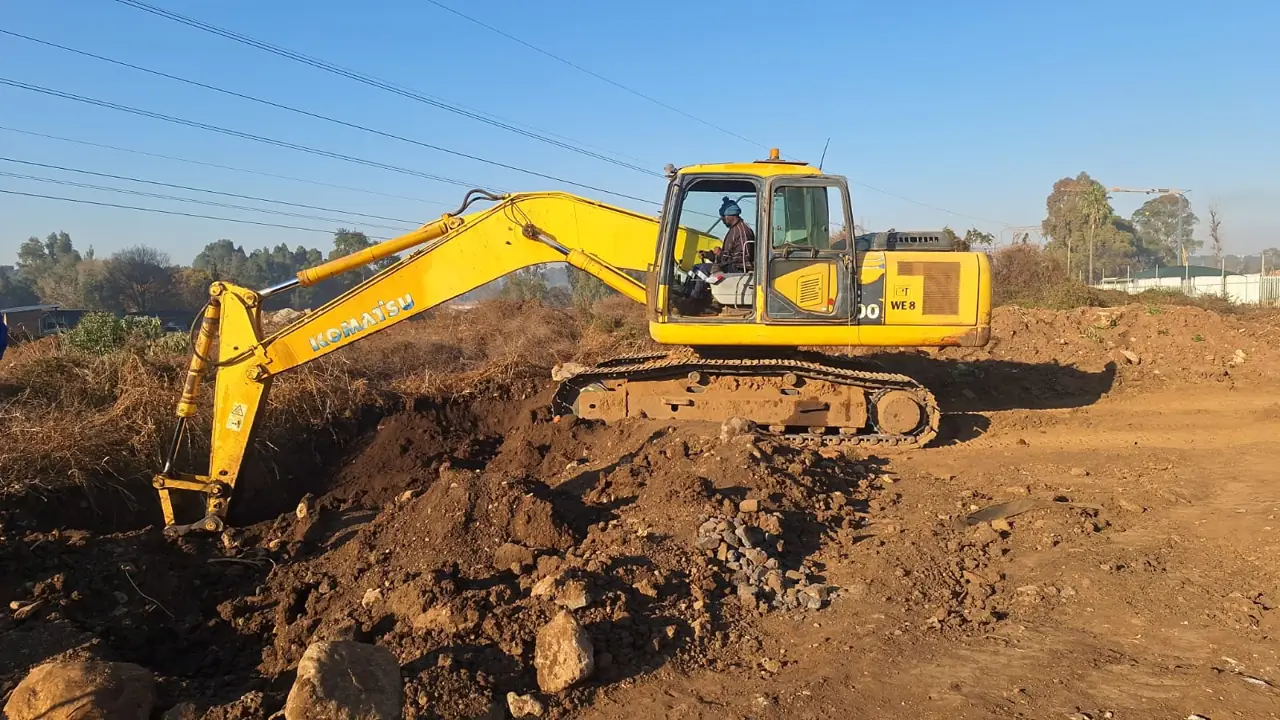
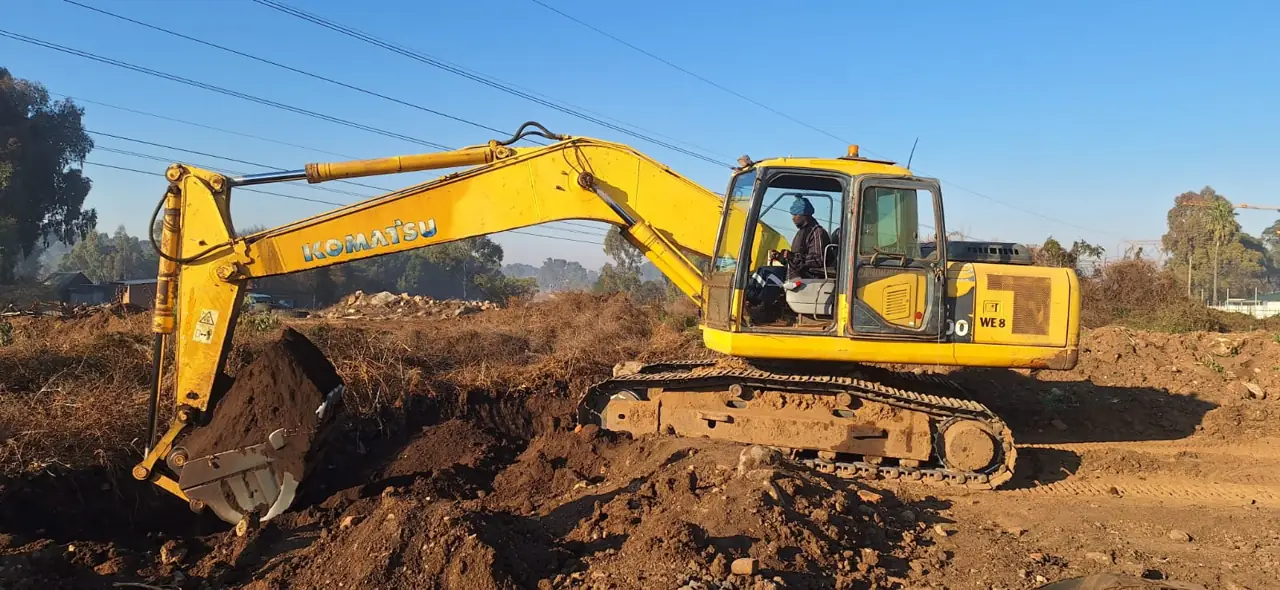
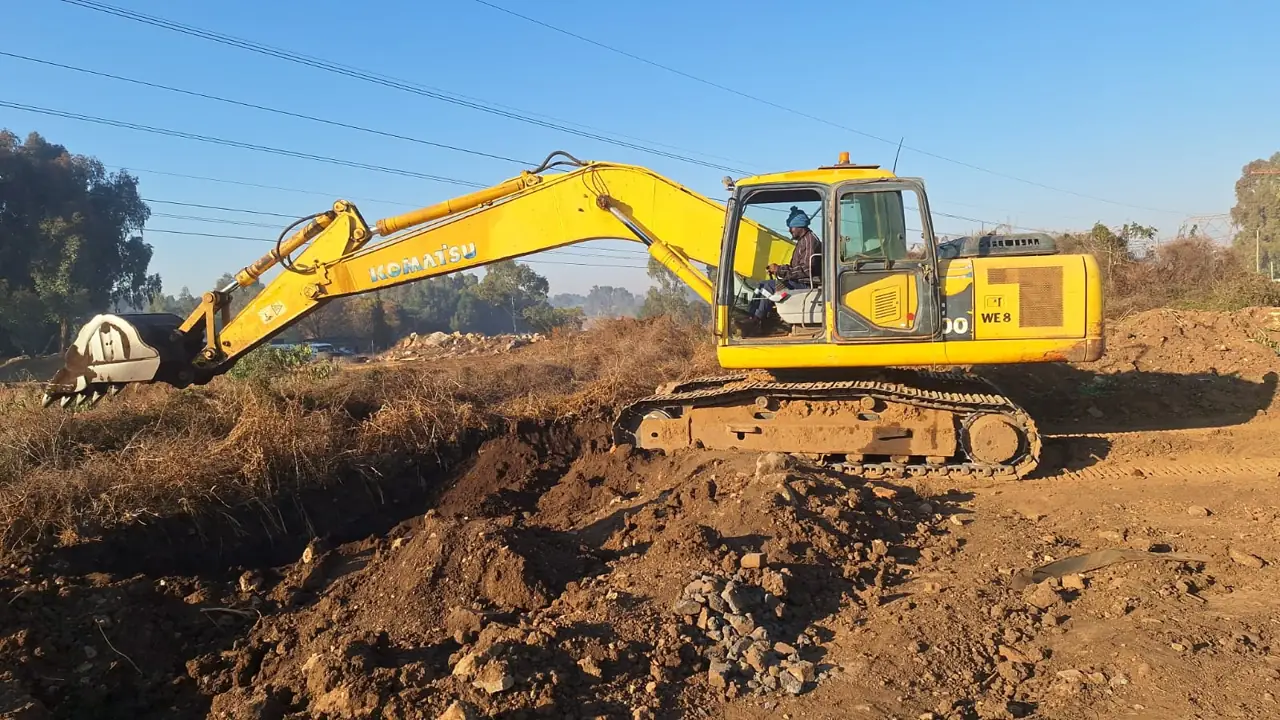
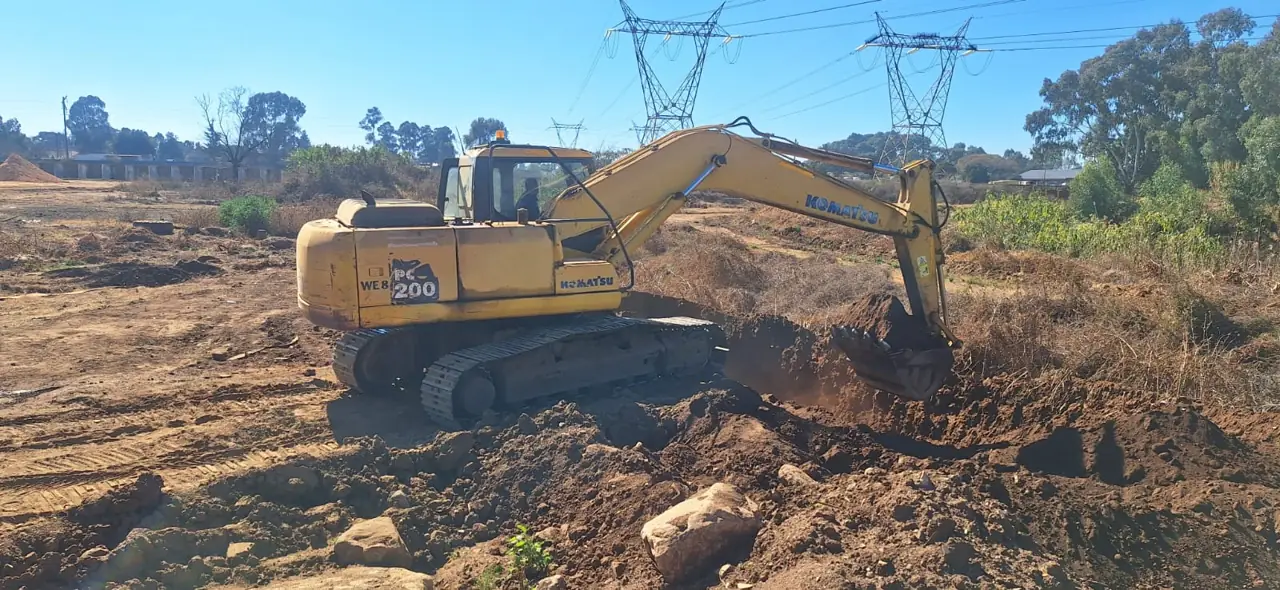
Real photos from our excavator practical training sessions.
How to make sure your excavator training is accredited (and not a scam)
Every year, learners lose money to "schools" that sell certificates without real training, or run courses that employers do not recognise. Before you pay any provider — including us — use this checklist:
- Ask for the accreditation number and letter. A legitimate provider will show you its QCTO and/or SETA accreditation and the scope it is accredited for.
- Verify it independently. Check the provider on the QCTO list of accredited Skills Development Providers or with the relevant SETA.
- Insist on real practical training. You should spend meaningful time in the seat of a real excavator, not only watch videos.
- Check there is an assessment. Competence is assessed by a qualified assessor — nobody should "guarantee" a pass.
- Visit the physical address. A real provider has an office you can walk into. Ours is opposite Hoffman Square in Bloemfontein CBD.
- Look at the certificate details. It should show your full name, ID or passport number, the training completed, the date and the provider's accreditation details.
Minimum entry requirements for excavator training
You do not need matric or previous machine experience to start. Here is what you need:
- Be 18 years or older
- Basic ability to read, write and do simple calculations (about Grade 8–10 or ABET Level 1 with communication and numeracy)
- Be physically and medically fit to operate machinery, with good eyesight and hearing (corrective lenses are fine)
- Ability to understand basic English instructions and safety signs
- A positive attitude to safety and teamwork
Documents to bring
- Certified copy of your South African ID — or valid passport for international students
- Highest school report or certificate
- Two passport-size photos
- Proof of residence (or your home address)
- CV and any previous machine certificates (if you have them)
A driver's licence is not required to enrol, although some employers value it.
International students & free accommodation
🌍 International students are welcome
We train learners from across South Africa and from neighbouring countries such as Lesotho, Zimbabwe, Botswana, Eswatini, Mozambique, Malawi and Zambia. Bloemfontein is only about 140 km from the Maseru border, which makes us one of the most convenient training centres for Basotho learners.
Bring your valid passport and make sure your travel documents allow you to stay in South Africa for the duration of the course. Our admissions team will guide you through the paperwork for enrolment.
🏠 Free accommodation for out-of-town learners
Travelling from Botshabelo, Thaba Nchu, Ladybrand, Kimberley, Welkom, Maseru or even further? Accommodation is free for students coming from other locations, so you can focus completely on your training instead of worrying about rent.
Tick "Yes, I need accommodation" on the registration form and we'll arrange it before you arrive.
How much does an excavator operator earn in South Africa?
Pay depends on your experience, the industry (construction vs mining), the size of the machine, the employer and how much overtime you work. Based on published 2026 salary data, here is a realistic picture:
| Experience level | Typical hourly rate | Approx. monthly (basic, 40-hr week) |
|---|---|---|
| Entry level (newly certified, < 1 year) | ± R37 per hour | ± R6,400 |
| Average operator | ± R45 per hour | ± R7,900 |
| Top 10% of operators | ± R60 per hour | ± R10,400 |
| Reported monthly range (all levels) | — | R3,750 – R14,100+ |
Sources: PayScale South Africa (Excavator Operator hourly pay, 2026) and Indeed South Africa salary reports. Monthly figures are calculated at 173 hours per month and exclude overtime, shift and site allowances. Actual pay varies by employer.
Where excavator operators work
- Building and civil construction companies
- Open-cast and surface mines (gold, coal, diamonds, quarries)
- Municipal water, sewer and roads departments
- Plant-hire companies (operator supplied with the machine)
- Renewable-energy, pipeline and telecom trenching projects
- Farming, dams and land-clearing contractors
- Self-employment — many experienced operators eventually own their own machine
Dos and don'ts every excavator operator must know
These are the habits that separate a professional operator from a dangerous one. Supervisors notice them on your first day.
✅ Do
- Do a full pre-start inspection every shift and record it on the checklist.
- Use three points of contact when climbing on and off the machine.
- Wear your seatbelt and full PPE — hard hat, reflective vest, safety boots, hearing protection.
- Confirm the location of underground services (water, electricity, gas, fibre) before digging.
- Keep a safe distance from overhead power lines and trench edges.
- Agree on hand signals with your banksman and keep eye contact.
- Lower the bucket to the ground, engage the safety lock and switch off before leaving the cab.
- Load trucks from the side or rear — never swing the bucket over the truck cab.
❌ Don't
- Don't operate a machine you are not trained and authorised to use.
- Don't let anyone stand within the swing radius or under a raised bucket.
- Don't use the bucket to lift or carry people — ever.
- Don't use the excavator as a crane unless it is rated and fitted for lifting.
- Don't dig under the machine's own tracks or undermine its footing.
- Don't travel across steep slopes or with the bucket raised high.
- Don't operate under the influence of alcohol, drugs or when overly tired.
- Don't ignore warning lights, leaks or strange noises — stop and report.
Ready to get into the cab?
Limited seats per intake to guarantee every learner real machine time.
How to enrol for excavator training in 5 steps
- ApplyComplete the online registration form below, call or WhatsApp us.
- Get confirmedOur admissions team contacts you with intake dates, fees and requirements.
- Submit documentsSend your ID or passport, school report and photos.
- Arrive & trainSettle into free accommodation (if from out of town) and start theory and practical training.
- Get certifiedPass your assessment and receive your certificate of competence.
Why learners choose Real Skills for excavator training
Accredited provider
QCTO / SETA-accredited FET institution with a physical campus in Bloemfontein and a second campus in Pretoria.
Real machines, real ground
Practical training on full-size excavators in a real digging environment — not a simulator.
Free accommodation
Learners from other towns, provinces and countries stay free of charge while they train.
Experienced facilitators
Trainers and assessors with industry experience who teach the habits employers look for.
Multi-machine pathways
Combine excavator with TLB, ADT dump truck, forklift and OHS courses to boost employability.
Central location
Bloemfontein CBD, opposite Hoffman Square — easy to reach by taxi or bus from anywhere in the Free State.
Related courses you can add
TLB (Backhoe Loader) Training · ADT Dump Truck Training · Front-End Loader Training · Forklift Training · OHS & Safety Courses
Excavator training for Bloemfontein and surrounding towns
Our Bloemfontein campus trains learners from the whole Free State and neighbouring provinces. With free accommodation for out-of-town students, distance is no longer a barrier.
- Bloemfontein
- Brandfort
- Botshabelo
- Thaba Nchu
- Petrusburg
- Dealesville
- Verkeerdevlei
- Winburg
- Reddersburg
- Smithfield
- Trompsburg
- Springfontein
- Bethulie
- Philippolis
- Ladybrand
- Clocolan
- Ficksburg
- Fouriesburg
- Clarens
We also welcome learners from all towns in the Free State, Eastern Cape, Western Cape, Northern Cape and North West, as well as international students.
Excavator training in Bloemfontein: frequently asked questions
Where can I do excavator training in Bloemfontein?
At Real Skills Training Institute, Cuthbert's Building, 1st Floor, Office 0107, 78 Charlotte Maxeke Street, Bloemfontein CBD (opposite Hoffman Square). Call 063 804 8966 or 051 023 0676, or register online on this page.
How long does excavator training take?
Duration depends on your level. Complete beginners need the full theory and practical programme, while experienced operators who only need a refresher or competency assessment finish much faster. Our admissions team will confirm the exact duration and next intake date when you apply.
How much does excavator training cost in Bloemfontein?
Fees depend on whether you are a beginner, need a refresher, or are combining excavator with other machines. Contact us for the current fee and any payment options. Be cautious of prices that look too good to be true — certificates without real practical training are not accepted by serious employers.
What are the minimum requirements for excavator training?
You must be 18 or older, able to read, write and do basic calculations (around Grade 8–10 or ABET Level 1), be medically fit with good eyesight and hearing, and understand basic English instructions. Matric and previous experience are not required.
Do I need a driver's licence to do excavator training?
No. A driver's licence is not required to enrol for excavator training, although some employers value it when hiring.
Is your excavator training accredited?
Yes. Real Skills Training Institute (Real Skills Technical FET College) is a QCTO / SETA-accredited institution. You are welcome to ask for our accreditation details and verify them independently before enrolling.
Do you accept international students?
Yes. We accept international students, including learners from Lesotho, Zimbabwe, Botswana, Eswatini, Mozambique, Malawi and Zambia. Bring a valid passport and ensure your travel documents cover your stay in South Africa for the course.
Is accommodation really free?
Yes. Free accommodation is always available for students coming from other towns, provinces or countries. Indicate that you need accommodation on the registration form so we can arrange it before you arrive.
How much does an excavator operator earn in South Africa?
Based on 2026 PayScale data, excavator operators earn around R37 per hour at entry level, about R45 per hour on average and around R60 per hour in the top 10%, roughly R6,400 to R10,400 per month basic. Mining jobs, overtime, allowances and multi-machine certificates can increase earnings.
Does an excavator certificate expire?
Most employers and mines require operators to do a refresher and renew their certificate of competence every two years. We offer refresher training and re-assessment for operators whose certificates have expired.
I already operate an excavator but have no certificate. Can you help?
Yes. Experienced operators can apply for a competency assessment or refresher course instead of the full beginner programme. Select "Experienced operator – assessment / refresher" on the registration form.
Can I combine excavator training with other machines?
Yes, and we recommend it. Combining excavator with TLB, front-end loader, ADT dump truck or forklift training makes you more employable and can increase your earning potential.
What happens after I submit the registration form?
Your application goes straight to our admissions office. A consultant will contact you by phone, WhatsApp or email to confirm intake dates, fees, documents and accommodation.
Register for Excavator Training
Complete the form and our admissions team will contact you with the next intake date, fees and requirements.
- Accredited training
- Free accommodation for out-of-town learners
- International students welcome
- Theory + real machine practicals
Prefer to talk?
063 804 8966 · 067 052 3590
081 000 7345 · 051 023 0676
admin@realskillztraininginstitute.co.za
Contact our Bloemfontein campus
- AddressCuthbert's Building, 1st Floor, Office 0107
78 Charlotte Maxeke Street, Bloemfontein, 9300
Opposite Hoffman Square - Phone051 023 0676 · 063 804 8966 · 067 052 3590
081 000 7345 · 063 118 7363 · 068 655 2746 - Emailadmin@realskillztraininginstitute.co.za
info@realskillztraininginstitute.co.za - Onlinewww.realskillztraininginstitute.co.za · Facebook · TikTok
Your excavator career starts in Bloemfontein
An accredited excavator certificate opens doors in construction, mining, municipal infrastructure and plant hire across South Africa and the region. With hands-on training, free accommodation for out-of-town learners and a welcome for international students, Real Skills Training Institute makes it easier than ever to get qualified. Transforming Ambitions Into Real Skills.


